Social media are changing Polish football
How Polish football and the people around it are seen has changed beyond recognition in recent years.
In this post
It is no secret that fans judge a federation's work, and the players' football, by the team's results. A few years ago, when the national team was posting poor results, three quarters of fans rated the PZPN's work as bad. This time the roles have reversed and the figure has swung by 180 degrees — as Maciej Sawicki, the federation's general secretary, has pointed out many times. The improved image also owes a great deal to the many projects built around the national team. The laczynaspilka.pl portal has considerably improved communication with fans and made the players far more available to a wide audience.
Who is behind Polish football's communication?
For several years now, behind-the-scenes material produced by Łukasz Wiśniowski has been appearing on the official LaczyNasPilka YouTube channel. Two feature-length films about the national team were made as well. One followed the road to qualifying for the 2016 European Championship in France, titled “Początek”, while the second, “Chcę więcej”, covered the competition at the tournament itself. Since those changes were introduced, the PZPN's image has improved markedly, and for younger generations the players have become the stars of a series about the Polish national team. Above all, showing the players from a human, more private side makes them feel closer and wins them sympathy. They come across as thoroughly relaxed, joking about everyone around them — and about themselves as well.
—In the whole Łączy nas piłka project, the role of Janusz Basałaj (head of the Media and Communications Department at the PZPN) is crucial. If we translated it into a corporate hierarchy, he is the editor-in-chief, the boss, the director, and ultimately the person responsible for my development as a journalist, because if it were not for him I would not have been at Orange Sport and later at the PZPN. It was Janusz who spoke with coach Nawałka at the very beginning of our project and set the terms of the cooperation. He vouched for us and told the coach that we were people worth trusting. Since I work closely with the national team, I am probably the one most associated with Łączy nas piłka, but it is Janusz Basałaj who is responsible for the whole project, because Łączy nas piłka is not only a YouTube channel but an entire portal, which during Euro 2016 recorded as many as 2 million unique users— said Łukasz Wiśniowski in an interview with interia.pl.
Football people are well aware of how important social platforms have become as a way of communicating with fans. Through them a supporter has closer and constant contact with the club and the players they support. They receive information and club news as it happens, and can join the conversation at the same time. One of the most media-present figures representing football clubs in Poland is the president of Warsaw's Legia, Bogusław Leśnodorski. He is often the first to announce changes in key positions at the club, or the signing or sale of a player. The official word that the club had finished working with coach Besnik Hasi appeared fastest of all on the president's own Twitter account.

Leśnodorski regularly shares his thoughts about Legia Warsaw on social media.

Fans get their information first-hand
Communicating online has become a matter of course from the perspective of the ordinary fan, and of the media, the clubs and the sports federations. That includes the players, who reach their fans through Facebook, Instagram and Twitter — and can show them what happens behind the scenes.
Social media is not only the fastest place to find information straight from the person you follow. Players show they can laugh at themselves, and they like to needle their teammates now and then. A well-aimed dig echoes a long way here. One case in point is the fashion skirmish started by the president of the Polish Football Association, Zbigniew Boniek. Known for his quick wit and his own particular view of the world, he took to Twitter to tease Poland's own fashion enthusiast, Grzegorz Krychowiak, laughing at his new coat. He also brought up former Poland international Jacek Bąk, who spent a large part of his career in France and, like Krychowiak, was no stranger to fashion.

Krychowiak versus Boniek — comebacks that build an image
Grzegorz Krychowiak, at the time a player for France's PSG, replied to let the president know that it was still too early for the two of them to go shopping together.

The icing on the cake was Krychowiak's next reply, aimed at Zbigniew Boniek. It proved to be a bullseye. The photo showed the PZPN president and what he wore in the 1980s, when he was still playing.

That was not the only jab the president aimed at people in Polish football. This time, at Łukasz Wiśniowski's wedding, the PZPN president went after a journalist he is fond of, Tomasz Ćwiąkała. The Eleven Sports Network commentator was compared to a boy — one of the wedding guests.
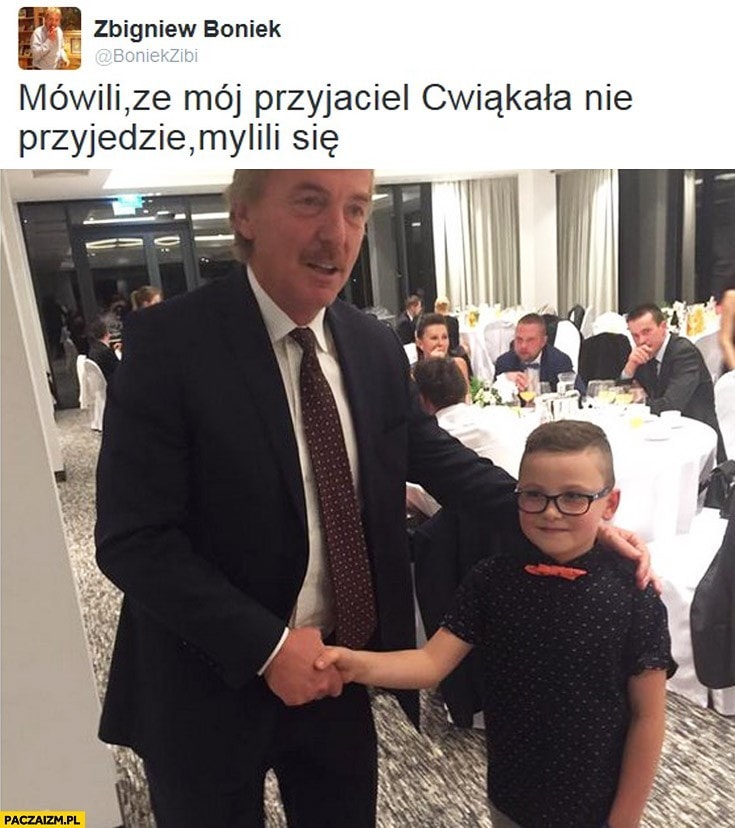
The photo set off an enormous discussion within minutes and showed once again that being able to laugh at yourself is the foundation, and the key to success. Zbigniew Boniek personally respects and likes Tomasz Ćwiąkała, as the commentator's reply made clear.
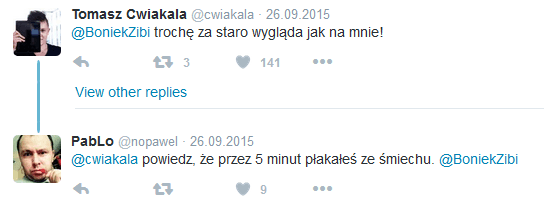
Stories like these show clearly how football people can use social media for fun and promotion at the same time. It is grist to the mill for every fan, and they plainly look on with approval.
Laughing at yourself as a strategy
Krychowiak's long-time colleague Wojciech Szczęsny got involved in the fashion commotion as well. The AS Roma player posted a photograph on Instagram with a dedication of his own.
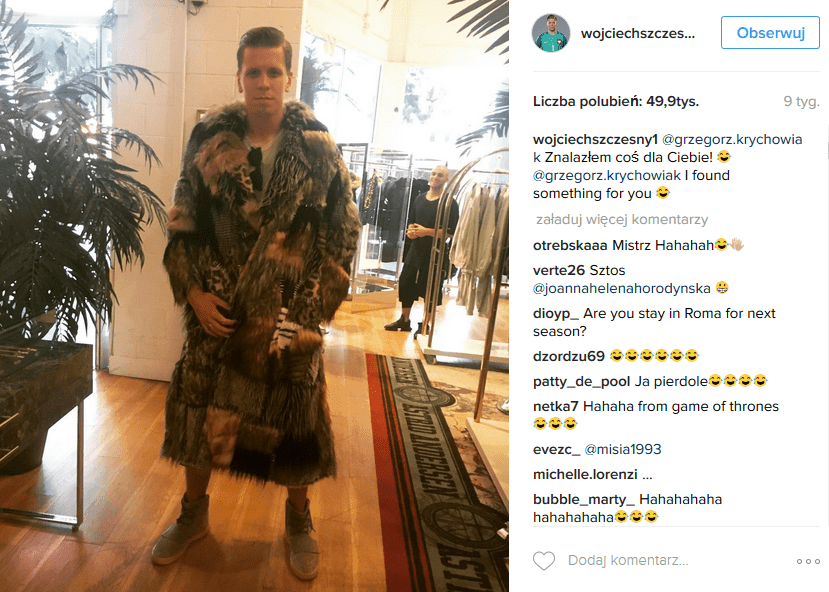
We did not have to wait long for the comeback. The Poland midfielder was quick to respond: “I don't have enough life left in me to teach you anything about fashion”
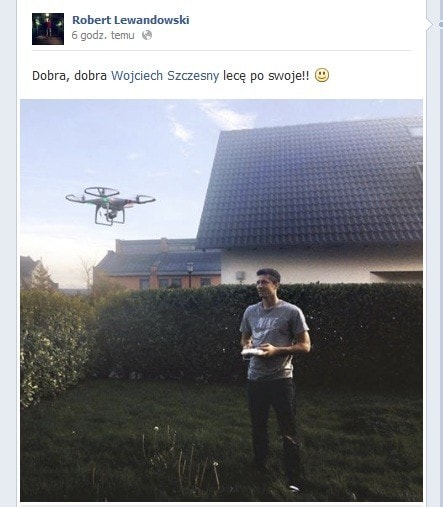
It happens that our internationals compete against each other on the pitch, in league football. Szczęsny would not be himself if he did not go after his rival from Borussia on social media too.
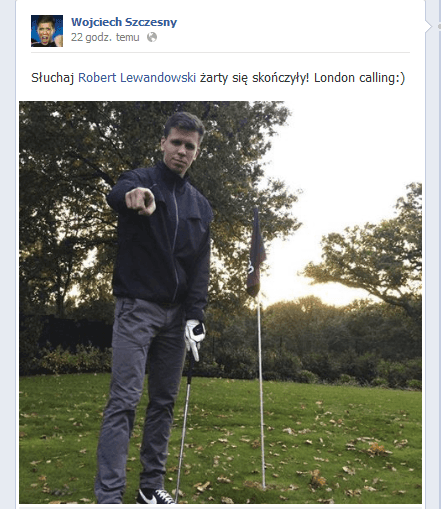
Lewandowski showed quick reflexes and a sense of humour, and the fans had a field day. That is exactly the point.
Footballers and sports people are showing what it means to laugh at yourself. They are thoroughly at home in the online world, and they are winning ever more fans because of it. Social media is not only fast access to information but also great fun, garnished with a large helping of laughter — for players and supporters alike. The Polish national team shows just how much social media shapes an image, and that results are not the only thing that counts. Hundreds of thousands of followers on the accounts of football figures, sports clubs et cetera allow for instant communication and for delivering content to a target audience, but above all for stoking interest and holding on to the position of the country's most popular sport — which, given the poor results, was quite a challenge. Which makes the PZPN's marketers all the more deserving of a chapeau bas!
Fortunately that is behind us now, and along with the fans' affection and respect, the results are climbing too — and we are waiting for a world championship.
 MarketingSocial LamaInfluencer vs. UGC creator – what's the difference?In online marketing we keep running into the terms “influencer” and “UGC creator” (User-Generated Content). Both roles revolve around making content, but they differ in their goal, their scope, their relationship with brands and the way they reach an audience. Choosing between an influencer and a UGC creator comes down to a company's marketing strategy. What is an influencer? An influencer is someone who builds their own community on social media and, thanks to that recognition, influences what their followers decide to do.READ POST
 Marketing
 Łukasz PłocińskiCan your Instagram posts show up in Google results?Can your Instagram posts show up in Google results? Until recently that was rare, but the breakthrough has arrived. As of July 10, 2025, Instagram officially lets Google index public content from professional accounts (business and creator). That means photos, videos and Reels from those accounts can turn up in Google – alongside websites, blogs and YouTube videos.READ POST
 MarketingSocial LamaThe best Instagram hashtags to grow your reach on social mediaHashtags on Instagram are one of the most effective ways to grow your reach and get in front of new audiences without paying for ads. According to the latest research, posts with well-chosen hashtags can pull up to 70% more reach than posts with no tags at all. In a world where Instagram's algorithm keeps getting stricter, using hashtags well can be the key to a successful social media strategy.READ POST